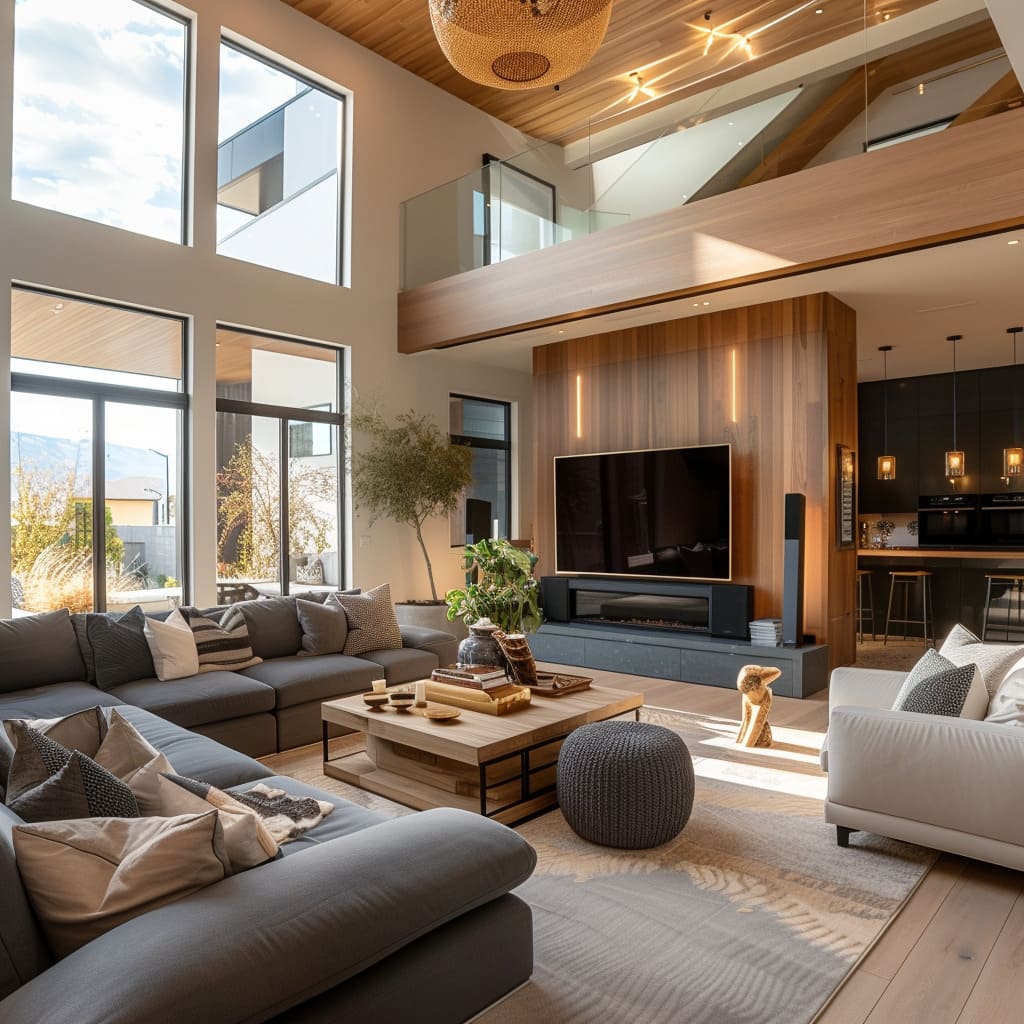
A lounge can look expensive, calm, and deeply personal without turning into a showroom nobody wants to sit in. That is the sweet spot most people miss. They buy matching sets, copy a trendy photo, then wonder why the room feels stiff by Tuesday. Real comfort does not come from spending harder; it comes from arranging the room around the way you actually live. That is where smart lounge ideas start paying off. When a room supports your habits instead of fighting them, everything feels easier, and the whole home starts carrying itself with more confidence.
You want a room that handles real life with grace. Morning coffee should feel easy there. So should a movie night, a hard conversation, a lazy Sunday, and the random moment when a guest drops by and notices the place feels finished in a way they cannot quite explain. The best lounges do not shout. They hold the room quietly. A good one lowers your shoulders the second you walk in, and that feeling is worth more than another decorative object you never truly needed.
A well-shaped lounge also gives your home a stronger emotional center. It can lift resale appeal, support daily routines, and make the rest of the house feel more intentional. When you design for people first, beautiful living spaces stop being fantasy and start feeling normal. That shift changes everything. It changes how long you stay in the room, how often you invite people over, and how much pride you take in the place you call home.
Start With the Room’s Real Job
Most lounges fail before a cushion even lands on the sofa because the room never got a clear purpose. People call it a living room, a family room, a sitting room, then expect one layout to handle work calls, guests, naps, storage, and playtime without friction. That muddle creates clutter fast. A better room begins with one honest question: what happens here most often, and what needs to feel easy every single day? Once you answer that clearly, half the styling decisions stop feeling confusing because the room finally has a spine.
Define the Main Use Before You Buy Anything
The smartest move is brutally simple: decide what the room is for before you start browsing furniture. If your lounge carries the weight of daily family time, then comfort beats sculptural drama every time. If you host often, seating flow matters more than a giant media wall. If the room doubles as a reading zone, light and acoustics should lead your choices. Function first sounds unromantic. It saves rooms. It also saves money, because you stop chasing pieces that look impressive online yet solve nothing in real life.
A young couple I know turned a narrow city lounge into a better space by dropping the fantasy version of themselves. They stopped planning for cocktail parties they never hosted and built around two things they actually did every week: streaming films and reading after dinner. One wider sofa, one proper lamp, one side chair, and the room finally clicked. It felt bigger, not because it was bigger, but because every piece belonged. Their old setup had more furniture and less ease. The new one had less stuff and far more room to breathe.
You should aim for one primary job and one secondary job, not five equal priorities fighting for floor space. That single decision will shape everything from rug size to outlet use to storage needs. It will also save you from buying “solution” pieces that only patch confusion. Rooms rarely become beautiful by accident. They become beautiful when the daily routine stops arguing with the furniture. Get that part right and even modest furnishings start looking sharper, because clarity always reads as style.
Map the Traffic Before You Style the Furniture
A lounge should let people move without doing a little apology dance around a coffee table. That sounds obvious, yet so many rooms force awkward paths because the layout was based on what looked balanced in a photo instead of what felt natural underfoot. Good traffic flow is not boring. It is the quiet structure that makes a room feel calm. When people can cross the room without sidestepping corners or bumping knees, the whole space starts reading as more generous.
Walk through the room as if you are carrying tea, laundry, or a sleeping child. You will spot the problem points instantly. That bulky ottoman in the middle may look rich, but if everyone keeps brushing past it, the room is working against you. Leave clear routes to doors, windows, and common seating spots. A lounge that moves well also looks better because the eye reads order before it reads décor. This is why some rooms feel elegant with very little in them: nothing interrupts the natural rhythm of being there.
This is one of those details people notice without naming. Guests do not say, “What excellent circulation.” They simply settle in faster, put their bag down with ease, and stay longer. In family homes, clear movement matters even more because daily life never arrives one person at a time. A smart room never makes you ask permission to walk through it. It just welcomes you in and gets out of the way. That ease is not accidental. It is designed, and it is one of the most underrated forms of comfort.
Build Comfort in Layers, Not in Clutter
Once the room knows its job, comfort needs structure. Too many people treat comfort like a pile-on project: more cushions, more throws, more little tables, more baskets, more objects. Soon the room feels padded but restless. True comfort comes from layers that support each other. Shape, texture, warmth, and scale need to work like a band, not a room full of soloists. The goal is not to fill empty spots. The goal is to make the room feel settled.
Choose Seating That Feels Good After an Hour
A sofa that looks sharp for ten minutes and punishes your back by minute twenty is not stylish. It is a trap. You should test seating with your real habits in mind. Do you sit upright and talk, curl into corners, stretch out for films, or perch with a laptop? Seat depth, cushion fill, arm height, and back support change the whole mood of the room more than color ever will. People underestimate this because comfort is not always obvious in photos, but your body notices it immediately.
There is a reason older houses with plain, sturdy seating often feel better than polished new rooms stuffed with trendy pieces. The furniture respects the body. That matters. I would take a clean-lined sofa with generous support over a photogenic one with stiff corners any day, because a lounge should invite use, not merely survive it. Nothing kills a room faster than furniture everyone avoids. When guests always choose the dining chair instead of the sofa, the room is telling on itself.
Pair the main sofa with one chair that does a different job. A swivel chair can open the room. A low lounge chair can soften a boxy layout. A small upholstered chair by a lamp can give one person a quiet pocket inside a busier space. Variety makes the room feel considered. It also keeps the seating plan from looking copied out of a catalogue. One strong contrast in shape or scale often gives the whole room more life than another matching piece ever could.
Use Texture to Warm the Room Without Overfilling It
Texture does the emotional heavy lifting in a lounge. A flat room feels cold even when the color palette is right, while a textured room can feel warm with very little decoration. This is where people often waste money. You do not need more items. You need better contrast between the ones already there, and you need materials that age with dignity instead of collapsing after one season. Rooms feel richer when the surfaces do not all tell the same story.
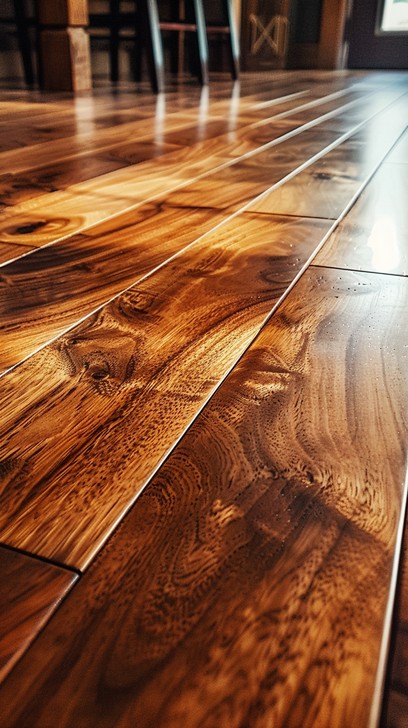
Start with the big surfaces. A wool rug underfoot, linen or cotton on the sofa, a timber table, a ceramic lamp base, maybe a velvet cushion if the room needs a bit of evening depth. Hard next to soft, matte next to smooth, woven next to polished. That tension makes a room feel alive. Too much of one finish makes it read dull or overly staged. Even a small change, like swapping a shiny synthetic throw for a textured woven one, can make the entire seating area feel more grown-up.
The trick is restraint. If every corner has a basket, a pouf, a stack of books, and a draped throw, the room starts begging for a break. Leave some surfaces quiet. Let one chair be clean. Let one table show its shape. Warmth grows faster when the eye has room to rest. Clutter is not coziness. It is noise in soft clothing. The best lounge décor makes you want to sit down, not start tidying the second you walk in.
Smart Lounge Ideas That Fix Lighting Fast
Lighting can rescue a plain room or ruin a well-furnished one in a single switch. The harsh ceiling light that seemed fine during move-in day becomes cruel at night, flattening faces and bleaching every thoughtful choice in the room. A lounge should glow, not glare. If the room looks good only in daylight, it is unfinished. Good lighting is not extra credit. It is part of the architecture of comfort, and it affects mood faster than almost anything else.
Mix Three Kinds of Light for Flexibility
The best lounges use layered light because real life changes by the hour. You need ambient light for general brightness, task light for reading or focused moments, and accent light for mood. One central fixture cannot do all three well. It never could. That is why rooms with a modest budget often beat expensive rooms that rely on a lonely chandelier. Layered light gives the space options, and options are what make a room feel lived in rather than locked into one stiff setting.
A floor lamp near the sofa handles reading and soft evening light at once. A table lamp adds intimacy and lowers the emotional temperature of the room. Wall lighting can sharpen an art corner or frame shelving without eating floor space. Even a small lounge improves fast when light comes from more than one height. Rooms feel richer when the shadows are deliberate. That slight variation in brightness from one side of the room to another makes everything look more thoughtful.
This is also where you stop a room from feeling frozen in one setting. Bright for a tidy Saturday morning. Soft for dinner. Focused for a late work catch-up. Dim for film night. Different light scenes give a lounge range, and range is what makes a home feel lived in rather than styled for one static photo. A room with layered light can handle your mood changing during the day without feeling like it needs a total reset each time.
Treat Natural Light as a Design Partner
Daylight changes the room before you do anything else, so ignoring it is a rookie mistake. A north-facing lounge may need warmth in materials and bulbs. A bright west-facing room may need calmer finishes and window treatment that softens late sun instead of fighting it. The room already has a mood. Your job is to work with it instead of trying to bulldoze it into another personality. Homes feel off when the design keeps arguing with the light.
Curtains matter more than people think. Hang them high and wide so the window feels generous even when the fabric is open. Pick materials that filter rather than smother unless glare is a serious issue. Sheer layers can save a room from looking bare in the day and exposed at night. They also make the light feel edited, which is a subtle luxury. That soft filtering effect can make ordinary furniture look calmer, kinder, and much more expensive than it really was.
For ideas on balancing softness with function, I often point people toward thoughtful room styling advice. The value is not in copying someone else’s room piece for piece. It is in learning how daylight, privacy, and atmosphere can work together instead of competing. That is when the room starts feeling expensive in the best way. It is also when you stop relying on one overhead bulb to do a job it was never built to handle.
Give the Room a Point of View
A lounge without personality feels rented, even when you own it. This is the stage where many people panic and start buying statement pieces with no story behind them. The better move is slower and far more effective. You give the room a point of view by editing what deserves attention and letting the rest support it. Style gets stronger when it becomes selective. Not everything in the room deserves equal volume.
Create One Strong Visual Anchor
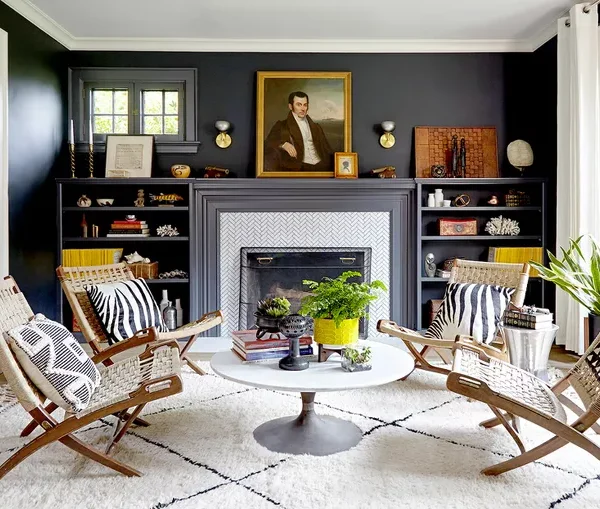
Every good lounge needs a place for the eye to land. That anchor might be a fireplace, a large artwork, a wall of books, a deep-colored sofa, or even an unusually shaped coffee table. Without it, the room can feel scattered because nothing gathers the visual energy. With it, the rest of the space begins to make sense. The anchor does not need to be loud. It just needs enough presence to tell the room where its center of gravity is.
A friend of mine used one oversized black-and-white photograph above a modest cream sofa, and the whole room suddenly had backbone. Before that, the space felt polite but forgettable. Afterward, even the simplest objects around it looked sharper. That is the funny power of a proper anchor. It tells the room what kind of voice to use. Once that voice is set, the rest of the styling gets easier because you are no longer decorating in circles.
Keep the anchor bold, then keep the support pieces disciplined. If the sofa is the star, do not also ask a patterned rug, a bright media unit, and six colorful cushions to compete for attention. Rooms tire people out when every item insists on being noticed. Style has taste when it knows where to stop. A room can be expressive without turning noisy. In fact, the strongest rooms usually hold something back, and that restraint is exactly why they feel memorable.
Add Personal Detail That Earns Its Place
The most memorable lounges carry traces of the people who use them. Not random clutter. Not souvenir overload. Actual detail with meaning. A framed concert poster from a night you still talk about, a handmade bowl from a local market, a stack of worn novels, or a vintage side table that reminds you of your grandmother’s house. Those things hold emotional weight. That weight gives the room character no trend cycle can fake.
Trend pieces age fast because they depend on outside approval. Personal pieces age well because they keep telling the truth about you. That honesty is magnetic. It also makes the room easier to maintain, since you stop chasing every new look drifting across your feed. You get pickier, and that is almost always a good sign. A room with a real point of view does not need constant refreshing because it is not trying to impress strangers.
If you want the room to feel finished, edit harder than you shop. Leave out anything that does not help the mood, the function, or the story. A lounge should not read like a receipt. It should feel like a life arranged with care. That is what turns ordinary rooms into living spaces people remember long after they leave. When someone says your home feels like you, that is the compliment that counts.
A strong lounge does more than look pretty on a good day. It supports how you gather, rest, think, and reset when life gets noisy. That is why smart lounge ideas matter: they help you build a room with backbone, not just surface charm. When you choose purpose over impulse, comfort over clutter, layered light over glare, and personality over trend-chasing, the room starts paying you back every day. You sit longer. You host more easily. You stop seeing the space as unfinished.
The next step is not a giant makeover. It is one honest decision. Measure the room. Remove one piece that is getting in the way. Fix the lighting you have been tolerating. Choose one anchor that gives the space conviction. Then keep going with that same clarity. Small, sharp choices create momentum faster than dramatic shopping ever will. A room improves through editing, not through panic buying on a Saturday afternoon.
Your home should not feel like a place you are still trying out. It should feel claimed. Start there, stay picky, and let the room become more useful before it becomes more decorated. That is how smart lounge ideas turn into long-term comfort, stronger style, and the kind of living spaces you are proud to invite people into. Take one room seriously, and the rest of the house usually follows. Good taste is not mystery. It is attention, restraint, and the nerve to choose what truly serves you.
What are the best smart lounge ideas for small homes?
Start with fewer, better pieces. Pick seating that fits the room, keep walking paths open, use layered lighting, and choose furniture with hidden storage. Small lounges feel richer when they breathe. Cramped rooms rarely need more décor; they need smarter editing.
How do I make a lounge look expensive on a budget?
Spend on what people touch and notice first: the sofa, rug, lighting, and curtains. Keep accessories limited, mix textures, and avoid tiny furniture. A budget room looks costly when it feels intentional, calm, and comfortably scaled from every angle.
Which colors work best for a relaxing lounge?
Soft earth tones, warm neutrals, muted greens, dusty blues, and creamy whites usually work beautifully. The trick is balance, not trend. Choose colors that flatter your natural light, then add contrast through texture so the room stays calm, never flat.
How many lights should a lounge really have?
Most lounges need at least three light sources at different heights. One overhead fixture is rarely enough. A floor lamp, a table lamp, and softer accent lighting create flexibility, flatter the room at night, and make everyday use feel far more comfortable.
What furniture should every functional lounge include?
A strong lounge usually needs a comfortable sofa, one flexible extra seat, a rug that grounds the layout, proper lighting, and a surface for drinks or books. After that, add only what supports your habits. Anything else must earn space honestly.
How do I stop my lounge from looking cluttered?
Edit in layers. Remove extra accessories first, then check surfaces, corners, and traffic paths. Keep only pieces that help function, warmth, or personality. Rooms look cluttered when too many objects compete at once. Calm styling always beats constant visual chatter.
Can a lounge be both family-friendly and stylish?
Yes, and it should be. Family-friendly does not mean dull or messy. Choose durable fabrics, rounded edges where needed, washable materials, and a layout that handles movement. Style survives real life when the room is planned for actual people, not perfect photos.
What is the biggest mistake people make in lounge design?
They buy furniture before deciding how the room should work. That single mistake creates bad layouts, wasted money, and awkward styling choices. A lounge improves fast when function leads first, because every later decision has a clear reason behind it.