A grand entry can lose its magic fast when the light fixture feels timid, cramped, or oddly stranded in the air. The right foyer chandelier gives a tall ceiling shape, warmth, and a clear focal point before anyone steps deeper into the home. In many American houses, especially two-story suburban foyers, open stair entries, and custom builds, the ceiling height does half the talking. The fixture has to answer with confidence.
Good lighting choices also affect how buyers, guests, and homeowners read the rest of the space. A polished entry signals care, taste, and order, which is why design-minded homeowners often treat lighting as part of a broader home improvement strategy rather than a last-minute purchase. Size matters more than price here. A costly chandelier can still look wrong if it floats too high, hangs too low, or fails to match the width of the room. The goal is not to buy the biggest fixture you can afford. The goal is to choose the one that makes the ceiling, walls, staircase, and front door feel like they belong together.
Foyer Chandelier Scale Starts With the Room, Not the Fixture
Tall entries trick the eye. A showroom chandelier may look large on display, then shrink the second it hangs beneath a 20-foot ceiling. That is why scale should begin with the foyer itself, not with a catalog photo or a trending finish. The room sets the rules, and the fixture has to respect them.
Why High Ceiling Entryway Lighting Feels Smaller Once Installed
Open vertical space swallows light fixtures because there are fewer visual anchors around them. A chandelier that looks dramatic at eye level often looks modest once it sits between tall walls, upper windows, and a staircase landing. This is common in U.S. homes built with two-story foyers, where the ceiling height creates drama but also makes proportion harder to judge.
The counterintuitive truth is that a high ceiling does not always need a massive chandelier. It needs a fixture with enough visual weight. A narrow lantern with open glass may need more height than a dense drum-style chandelier because the eye reads empty space differently than metal, shade, and crystal.
A practical starting point is to measure the room’s length and width in feet, add those numbers together, and treat the total as a rough chandelier diameter in inches. A 10-by-12-foot foyer often feels balanced with a fixture around 22 inches wide. In a taller space, that number may need a slight increase, but the room width still matters more than ego.
How Entryway Chandelier Height Changes the Whole Mood
Height decides whether the fixture feels gracious or awkward. In a standard foyer, clearance under the chandelier matters most. In a two-story entry, the bigger issue is visual alignment. The chandelier should often sit where it can be seen from outside through upper glass, from the stair landing, and from the main floor without feeling lost.
A common mistake is hanging the fixture too high because homeowners fear it will block the view. That fear makes sense near a doorway, but it can flatten the room. A chandelier tucked near the ceiling feels like an afterthought, especially when the entry has tall blank walls below it.
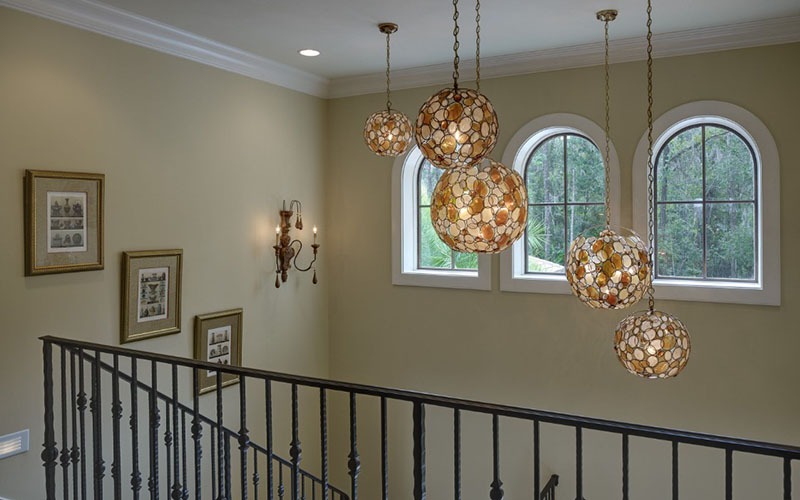
For many two-story foyers, the bottom of the chandelier often lands near the second-floor level or slightly below it, depending on window placement and stair rail height. That placement lets the fixture belong to the open volume instead of clinging to the ceiling. It feels intentional from the street and natural from inside the house.
Choosing a Foyer Chandelier That Fits the Architecture
After scale, architecture takes over. A fixture can be the correct size and still feel wrong if it ignores the home’s bones. Colonial entries, modern farmhouses, Craftsman homes, and new luxury builds each ask for a different kind of presence. The best choice looks like it was planned when the house was drawn, even when it was bought years later.
Matching Chandelier Style to Staircases, Doors, and Trim
A staircase is not background in a high entry. It is often the largest design feature in the room, so the chandelier has to work with it rather than compete against it. A curved staircase can carry a more sculptural light, while a straight stair with square balusters often looks cleaner with a lantern, tiered frame, or simple ring form.
Door style matters too. A black-framed glass front door can support darker metal finishes, while a classic paneled wood door may feel warmer with aged brass, bronze, or soft gold. White trim gives you room to contrast. Heavy stained trim usually asks for restraint because the wood already carries visual weight.
American homeowners sometimes copy a fixture from a luxury listing without noticing the surrounding materials. That is risky. A crystal-heavy chandelier may look graceful in a formal brick Georgian home, then feel strange in a relaxed Colorado-style entry with stone floors and exposed beams. The fixture should speak the same design language as the house.
What Size Chandelier for Two Story Foyer Designs Works Best?
A two-story foyer needs a fixture that fills vertical space without crowding the doorway. Width still comes from the room’s footprint, but height should respond to the ceiling. A chandelier that is 30 inches wide but only 18 inches tall may feel squat in a 20-foot entry. A taller lantern or tiered fixture can solve that problem without adding too much width.
This is where many buyers get nervous. They think height means heaviness. Not always. Open-frame chandeliers, tapered lanterns, and airy multi-tier lights can create height while keeping the view clean. That makes them useful in foyers with upper windows, balcony rails, or art on the stair wall.
The smartest move is to tape out the fixture’s approximate width on the floor and mark its hanging height on the wall with painter’s tape. It sounds plain, but it works. Your eye understands the room better when the size becomes visible in the actual space instead of living as a number on a product page.
Foyer Chandelier Placement Controls Comfort and Safety
A tall entry is still a pathway. People carry groceries, move furniture, greet guests, open doors, and walk under the fixture every day. Beauty cannot fight function here. If the chandelier interrupts movement, causes glare, or makes maintenance painful, the design loses its charm fast.
How Far Should a Chandelier Hang in a Tall Entry?
Clearance is the first safety check. In foyers where people walk beneath the fixture, the bottom should usually sit at least 7 feet above the floor. In a two-story space, it often hangs much higher, but that 7-foot rule protects comfort near the main walking path.
Window alignment can refine the final position. If the foyer has a tall arched window above the front door, the chandelier often looks best centered within that window view from the outside. This gives the home nighttime curb appeal and keeps the light from looking random after dark.
Glare deserves equal attention. Bare bulbs aimed directly toward eye level can make a grand entry feel harsh. Frosted glass, shaded bulbs, dimmers, or candle-style lamps with warmer output can soften the effect. The fixture should greet people, not interrogate them.
Why Electrical Box Location Can Limit Your Best Choice
The ceiling box decides more than homeowners expect. If the box is not centered in the foyer, the chandelier may expose a layout flaw that furniture once hid. In older homes or renovated entries, this happens often. The front door, stair opening, and ceiling box do not always share the same centerline.
A professional electrician can often relocate the box or install a rated support brace, but that should happen before ordering a heavy fixture. Large chandeliers need proper support. Drywall alone is not enough, and guessing at weight limits is a bad plan.
Maintenance access also matters. A fixture that needs frequent bulb changes can become a burden in a 19-foot foyer. LED-compatible designs, longer-life bulbs, and accessible shapes save future hassle. A chandelier should not require a rented ladder every few months because the bulbs were chosen carelessly.
Foyer Chandelier Choices Should Support the Home’s Daily Life
A beautiful entry still has to live with real people. Kids run through it. Guests arrive with coats. Delivery boxes land near the door. Holiday garland appears in December. The best chandelier works through all of that without feeling fragile, fussy, or out of place.
Best Chandelier Shape for Open Entryway Views
Shape controls how much of the room remains visible. Round chandeliers soften square foyers and work well when the entry has curved stairs or arched windows. Rectangular fixtures suit long foyers, double doors, and homes where the entry opens directly into a hallway.
Lantern shapes remain popular because they balance tradition and openness. They give the eye a defined outline without blocking sightlines. That makes them a strong choice for homeowners who want presence without heavy sparkle or dense ornament.
The unexpected winner in many tall entries is restraint with height. A slim, tall fixture can feel grander than a wide, bulky one because it respects the vertical space. It lets the room breathe while still giving the ceiling a reason to exist.
High Ceiling Chandelier Ideas That Age Well
Trends move faster than houses do. A chandelier that looks perfect on social media in 2026 may feel tired before the mortgage paperwork gathers dust. Lasting choices usually have clean lines, honest materials, and a finish that relates to other hardware in the home.
Black, bronze, aged brass, polished nickel, and soft gold can all work when they connect to nearby details. The problem starts when the chandelier becomes the only piece in that finish. A brass light in a foyer with all chrome hardware can feel stranded unless the design repeats that warmth through a mirror, console table, frame, or stair detail.
Dimmers are not optional in a tall foyer. Morning light, evening guests, winter darkness, and late-night trips to the door all need different brightness levels. Good lighting is not one fixed setting. It is a range of moods you control without thinking about it.
Conclusion
A tall foyer gives you a rare design chance: one fixture can shape the entire first impression of the home. Treat that chance with care. Measure the room, study the ceiling height, look at the staircase, and think about how the light will feel from the front door, the second floor, and the street at night.
The best foyer chandelier is not chosen by price, trend, or guesswork. It comes from proportion, placement, and a clear read of the home’s architecture. When those pieces work together, the entry feels settled before anyone names what changed. That is the quiet power of good lighting.
Before ordering, mark the size on the floor, test the drop on the wall, and confirm the ceiling box can support the fixture. Then choose with confidence, not panic. Your entry should not whisper when the rest of the house is ready to speak.
Frequently Asked Questions
How do I calculate chandelier size for a tall foyer?
Add the foyer’s length and width in feet, then use that total as a starting diameter in inches. A 12-by-14-foot foyer points toward a fixture around 26 inches wide. High ceilings may need extra height or visual weight.
What is the best height for a chandelier in a two-story entryway?
The chandelier usually looks best near the second-floor level or aligned with upper windows. It should feel centered in the open space, not pressed against the ceiling. Keep safe clearance below if people walk under it.
Can a foyer chandelier be too large for a high ceiling?
Yes. A tall ceiling can handle more presence, but the fixture still has to fit the room width, door swing, staircase, and sightlines. Oversized chandeliers can crowd the entry and make the ceiling feel lower.
Should a foyer chandelier match the front door hardware?
It does not need to match exactly, but it should relate. A black fixture can work with bronze hardware if the room has other dark accents. A lonely finish with no connection nearby often feels accidental.
What chandelier shape works best for a narrow entryway?
A narrow entry usually works better with a slim lantern, vertical pendant, or elongated fixture. Wide round chandeliers may push too close to the walls. The goal is height and presence without stealing walking space.
Are crystal chandeliers good for high ceiling foyers?
Crystal can work well in formal entries with enough space and matching architectural detail. It may feel out of place in casual farmhouse, Craftsman, or modern rustic homes. The room’s style should guide the choice.
Do I need a dimmer for an entryway chandelier?
A dimmer is one of the smartest upgrades for a foyer light. It lets you adjust brightness for daytime, evening guests, holidays, and late-night use. Tall entries can feel harsh without brightness control.
Who should install a heavy chandelier in a high foyer?
A licensed electrician should install heavy or high foyer fixtures. The ceiling box may need reinforcement, and tall ladder work adds risk. Professional installation protects the fixture, the ceiling, and anyone walking below it.