A deck usually fails at the place most homeowners never inspect. The walking surface may look solid, the railing may feel firm, and the posts may stand straight, but one weak connection at the house can turn the whole structure into a hanging load. Proper ledger attachment matters because the ledger does more than hold framing in line. It transfers weight, movement, moisture risk, and pull-away force into the home’s framing system.
Across the USA, inspectors pay close attention to this detail because deck collapses often start where wood, fasteners, flashing, and wall framing meet. Homeowners reading trusted home improvement resources often focus on decking boards or railing style, yet the hidden connection behind the first deck joist carries far more risk. The International Residential Code says deck ledgers must be flashed to keep water away from the house band joist, and lag screws must fully extend beyond the inside face of that band joist.
A good deck connection does not depend on one strong part. It depends on a full load path, dry framing, correct spacing, and hardware that matches the wall behind it. Miss one of those, and the deck may still pass the eye test. That is the dangerous part.
Ledger Attachment Starts With the Wall Behind the Deck
A deck does not attach to siding, brick veneer, trim boards, foam sheathing, or hope. It attaches to structural framing. That sentence sounds plain, but it separates safe builds from expensive tear-outs across American neighborhoods every spring.
Why the House Band Joist Carries the Real Load
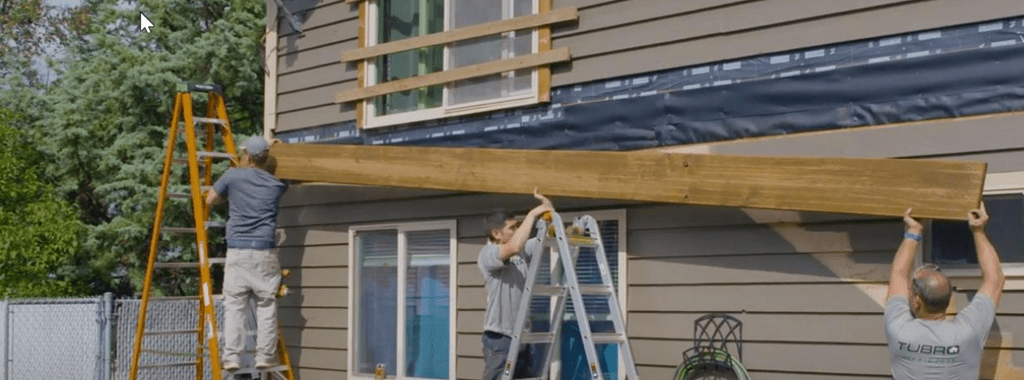
The house band joist gives the ledger something solid to bite into. When a builder drives fasteners through the ledger, the goal is not to pin a board to the outside wall. The goal is to clamp the deck framing to the home’s floor system so gravity and outward pull have a direct path into the structure.
That is why the wall assembly matters before the first hole gets drilled. A newer home with engineered rim board may need different fastener rules than an older house with sawn lumber. A stucco wall in Arizona, a vinyl-sided colonial in Ohio, and a coastal home in North Carolina can all hide different risks behind the same-looking ledger line.
The counterintuitive part is simple: a thicker exterior wall can make the connection weaker if the fastener cannot reach sound framing. Foam, brick veneer, and thick cladding add distance. They do not add strength.
Why Siding and Veneer Must Not Become Structure
Siding keeps weather out. It does not carry a deck. When a ledger gets installed over siding, the fastener may compress soft layers, create uneven bearing, and leave gaps where water sits. That small shortcut can become a slow failure.
Brick veneer creates a worse trap because it feels strong. It is masonry, it is heavy, and it looks permanent. Yet veneer is not the primary wall frame. Current deck guidance warns that the code does not allow a ledger to attach directly to brick veneer because the connection must reach the main structural framing.
A homeowner in Pennsylvania might see a deck bolted through brick and assume the masonry is doing the work. A good inspector sees a question mark. The smart move is to confirm the approved connector system or switch to a freestanding deck when the house wall cannot provide a clean, code-ready attachment.
Fasteners Decide Whether the Ledger Holds or Slips
A ledger can be perfectly straight and still be wrong. Fastener type, diameter, spacing, edge distance, and penetration decide whether the board acts like part of the frame or becomes a decorative plank under stress.
Lag Screws and Bolts Need More Than Muscle
Lag screws and bolts work when they match the deck span, joist length, lumber type, and house framing. Random spacing is not a method. Tight rows of oversized fasteners can split the ledger, while undersized hardware can loosen as the deck cycles through wet winters and hot summers.
The IRC ledger table includes limits and notes that matter in the field, not only on paper. It allows interpolation but not extrapolation, requires flashing, assumes specific dead load values, and states that the lag screw tip must fully extend beyond the inside face of the band joist.
The quiet mistake is overconfidence. A contractor may say, “We used big bolts,” as though size alone solves the problem. Big fasteners placed badly can damage the same framing they were meant to protect.
Structural Screws Change the Job, Not the Responsibility
Approved structural screws have made deck work cleaner in many cases. They can reduce drilling steps, improve installation speed, and help builders hit consistent spacing. Still, they are not magic nails. They must match the manufacturer’s load table, wall condition, and local inspection standard.
Simpson Strong-Tie’s deck fastening guidance covers ledger connections, joist-to-beam connections, beam-to-post connections, and code-related connector options across recent IRC and IBC editions. That matters because the ledger is only one part of a larger deck frame.
A homeowner in Texas may see a neat row of structural screws and feel reassured. The better question is whether those screws are approved for that exact use, driven into the right framing, and spaced for the deck’s actual load. Neat does not always mean sound.
Deck Flashing Keeps Strength From Rotting Away
The strongest fastener pattern loses value when water gets behind the ledger. Wood does not need drama to fail. It needs trapped moisture, poor drainage, and enough time.
Deck Flashing Must Protect the Hidden Joint
Deck flashing directs water away from the gap where the ledger meets the house. That joint gets punished by rain, snowmelt, splashback, and debris. In colder states, freeze-thaw cycles can make small water paths larger. In humid states, trapped moisture can feed decay long before the surface looks stained.
Code language is direct here: ledgers must be flashed in accordance with exterior wall requirements to prevent water from contacting the house band joist. The phrase sounds technical, but the field meaning is blunt. Keep water out of the framing, or the connection starts aging from the inside.
The strange part is that flashing often fails because someone tried to make the deck look cleaner. Hidden trim, sealed gaps, and tight cladding can trap water when they should be giving it a way out.
Water Damage Turns Good Hardware Into False Confidence
Galvanized or stainless hardware can look fine while the wood around it weakens. That is why a ledger inspection should never stop at visible fasteners. Soft sheathing, stained rim board, swollen siding, or a spongy feel near the house can point to deeper trouble.
A deck in Oregon may face long wet seasons. A deck in Florida may deal with heavy rain and warm air that keeps wood damp. Different climate, same lesson. The ledger needs both mechanical strength and moisture control.
Good builders treat flashing as part of the structural plan, not a cosmetic add-on. They layer it correctly, keep drainage paths open, and choose materials that will not react badly with the fasteners. Dry wood holds better. It also tells the truth longer.
Lateral Load Connectors Stop the Pull-Away Problem
Vertical load is only half the story. People walk, gather, shift furniture, lean on railings, and move across the deck. Wind and vibration add more force. The deck does not only press down; it can pull away.
Lateral Load Connectors Tie the Deck Back Into the Floor Frame
Lateral load connectors create a direct tie between the deck joists and the house framing. They help resist the outward force that can separate a deck from the wall, especially when the ledger connection alone is not enough for the full load path.
The American Wood Council’s deck guide includes details for deck construction and shows ways to address lateral loads for non-ledger decks and other conditions. Simpson’s guidance also points builders toward connector options designed for code-related lateral-load requirements.
A plain ledger with fasteners may carry vertical weight, yet still leave the deck vulnerable to pull-away movement. That is the part many DIY builds miss. Strength downward does not equal strength sideways.
The Best Connection Method Depends on the Existing House
Older homes make this detail harder. Finished basements, drywall ceilings, plumbing, wiring, and HVAC runs can block access to the inside face of the floor frame. In those cases, an approved exterior-mounted tension tie or alternate engineered detail may be the right answer.
A ranch home in Kansas with open basement joists gives a builder more options than a finished townhouse in Maryland. The method changes because access changes. The safety goal does not.
This is where a permit can help instead of slow things down. A good building department forces the question that homeowners often skip: where does the load go after it leaves the deck? When that answer is clear, the connection becomes less of a guess and more of a system.
Separation Prevention Comes From a Full Load Path
A deck that stays attached is not the result of one perfect bolt. It is the result of every part handing force to the next part without a weak break in the chain.
Joist Hangers and Beams Must Support the Ledger Plan
The ledger may be the house-side anchor, but the rest of the deck still has to cooperate. Joist hangers, beam connections, post bases, guard posts, and stair attachments all affect how movement travels through the structure. Weak hardware away from the house can still feed stress back into the ledger.
Research on exterior deck lateral load paths has pointed out that joist hangers can become a weak link and deserve special attention. That finding matches what experienced inspectors see on older decks. The ledger gets blamed, but the whole frame has been moving poorly for years.
A homeowner in Colorado might replace ledger bolts and think the job is done. If the joist hangers are rusted or undersized, the repair only handles part of the risk. Decks fail as systems, not as isolated boards.
Freestanding Decks Solve Problems Attached Decks Cannot
Some houses should not receive a traditional attached deck. Brick veneer, questionable rim framing, heavy exterior insulation, water damage, or complex wall assemblies may make a freestanding design safer and cleaner. That choice can feel like extra work, but it may remove the highest-risk connection entirely.
A freestanding deck still needs footings, bracing, beams, and safe stairs. It is not a shortcut. It simply stops asking the house wall to do a job it cannot do well.
The unexpected insight is that detaching a deck can be the strongest attachment decision. When the wall is wrong, forcing a ledger onto it only hides the problem behind trim. A separate support system puts the load where you can see it, inspect it, and maintain it.
Conclusion
A deck should feel calm under your feet because the hidden structure is doing its job without complaint. That confidence starts at the ledger, but it does not end there. Fasteners need correct spacing. Flashing needs clean drainage. Connectors need a direct load path. The wall behind the deck needs to be worthy of the load placed on it.
The safest ledger attachment is never a single product or one builder’s favorite habit. It is a matched system that respects the house, the climate, the code, and the way people actually use outdoor space. A weekend cookout can place more movement on a deck than a quiet inspection ever will, so the connection has to be built for life, not for appearances.
Before you repair, replace, or approve a deck, look at the ledger line with fresh suspicion. Ask where the fasteners land, where the water goes, and how the deck resists pull-away force. Bring in a qualified deck contractor or local inspector before small doubts become structural separation.
Frequently Asked Questions
What is the safest way to attach a deck ledger board to a house?
The safest method uses approved fasteners installed into structural house framing, proper flashing, correct spacing, and lateral load connectors when required. The ledger should never attach only to siding, trim, or veneer. Local code and site conditions decide the final method.
Can a deck ledger be attached over vinyl siding?
Vinyl siding should be removed where the ledger sits so the board can bear properly against the wall assembly and connect to framing. Installing over siding can create compression gaps, water traps, and weak bearing. Proper flashing must protect the exposed joint.
Are lag screws better than bolts for deck ledger connections?
Both can work when approved for the deck design and installed correctly. Bolts may provide strong clamping, while lag screws can perform well with proper size, spacing, and penetration. The wrong spacing or poor framing makes either option unsafe.
Why is deck flashing so important behind the ledger?
Flashing keeps water away from the house band joist and the back of the ledger. Without it, moisture can rot framing while the deck still looks solid from outside. Once the wood weakens, even good fasteners lose holding power.
Do all decks need lateral load connectors?
Many attached decks need a way to resist pull-away force, but the exact requirement depends on the adopted local code, deck design, and connection method. Lateral load connectors are often used to tie deck joists back into the house framing.
Can I attach a deck ledger to brick veneer?
A traditional ledger should not be attached directly to brick veneer because veneer is not the main structural framing. Some approved specialty connectors may solve certain veneer conditions, but many homes need an engineered detail or a freestanding deck instead.
How often should a deck ledger connection be inspected?
A deck ledger should be inspected at least once a year and after severe storms, heavy snow, flooding, or noticeable movement. Look for loose fasteners, staining, rot, soft wood, rust, gaps, and flashing damage near the house wall.
When is a freestanding deck better than an attached deck?
A freestanding deck is better when the house wall cannot provide a safe structural connection. Brick veneer, damaged rim joists, thick exterior insulation, poor access, or moisture problems can make an attached ledger risky. Separate posts and beams can avoid that weak point.